
The program.
Leading the Microsoft Surface & Edge UX Design and Testing programs at Wunderman Thompson - Los Angeles was one of the most exciting chapters of my career. When I began working with the Microsoft Surface team, the Surface brand was still in its infancy, having only just launched its flagship products, Surface Pro 3 & 4 in 2014 and 2015, respectively. Today, Microsoft Surface offers a full suite of hardware products, including laptops, tablets, desktops and interactive whiteboards.
Delivering truly dynamic and interactive digital experiences is necessary to capture the attention of customers. This is especially true when introducing new product categories. My leadership with the Microsoft Surface program achieved this goals with a level of sophistication in delivery that resulted in building one of the best UX, design and testing programs at Wunderman Thompson (formerly POSSIBLE). Leading and building that program prepared me in so many unique and interesting ways, and I’m proud of the work that we did together.
During my leadership, we launched several dynamic digital web experiences and optimized Microsoft’s web performance. We supported several cycles of Surface product launches — delivering richer, more dynamic, modular web experiences coupled with more compelling storytelling — but this only represented a small fraction of the work. Our extended goal involved improving Microsoft.com overall by leveraging design and research, user experience and site stategy, marketing strategy and technology improvements.
In its growth stages, I advocated for more data analysis, more strategy more research and a dedicated team. I demanded more data analysis and research, more user studies, more strategy, more design thinking,, greater testing, more dynamic user experiences and better technology—a more nimble CMS and Design System, and most importantly, more accessibility. I collaborated with Brand Studio to influence photography and video production, advocating for more premium, diverse imagery, richer media, more movement and animation. We influenced their design studios, inspired new site features, developed new concepts and prototypes and a refreshed their design system.
We launched digital experiences both seasonally and yearround, regularly introducing new digital experiences and conducting research analyses and experimentation to improve existing web experiences along the way. We introduced new features into Microsoft’s design system and worked with Microsoft Brand teams to optimize digital media.
By the end, we had grown from a paltry $1.5m to $6.5m in yearly agency revenue.
For the client, I:
Introduced and delivered new premium web experiences to meet the needs of their customers
Built and improved team relationships across BUs and streamlined web process and operations
Introduced greater collaboration across business teams and aligned stakeholders on overall goals
Collaborated with brand and product teams to deliver richer, more compelling media experiences and story content
Introduced site features that improved site performance, usability, user experience and customer engagement.
Executed global releases in 43 markets worldwide, ensuring compliance with guidelines and best practices
For the agency, I:
Fostered deeper relationships and connections with client stakeholders and agency teams to improve working relationships
Amplified client launches, team honors and accomplishments
Identified areas of opportunity to better support the needs of the client, improved client relationships creating new scopes of work, proposals and increased revenue
Expanded the Surface program to support both consumer and commercial web properties and testing programs, increasing overall program revenue from $1.5m to $6.5m over a 5-year period.
Advocated for the relocation of testing programs to consolidate account revenue, increase agency margins and improve site design and performance
The impact.
The Microsoft Surface program was highly successful for Wunderman Thompson, achieving huge gains in revenue and scale during my 6-year leadership tenure building and growing the program. What started as a small production team with a few projects and a $1m budget grew into a large team of over 25+ digital professionals and a budget of $6.5m in yearly revenues. We pivoted from being a purely production focused team to being the strategic partner of our clients, often entrusted to direct their third-party affiliates in order to drive results, and achieving wide scale impact and influence over the direction of Microsoft.com and its sub-properties, Microsoft Surface and Microsoft Edge. By the end of my term, I had consolidated strategy, design and testing into one program and taken control of both Surface consumer and commercial web properties.
I built a culture of trust with my team and my clients, becoming known for my integrity, leadership, and stability; delivering incredible results under pressure, and a significant record of long-term achievement.
3 web properties
The program was growth focused, expanding from production to strategic consulting, design and testing across 3 separate web properties for Microsoft, including Surface Consumer and Commercial, and Microsoft Edge.
50+ global markets
The program executed digital experiences in multiple global markets. Originally deploying in 43 markets, the program expanded to execute in over 50+ global markets by the end of my tenure.
6x increase in revenue
Yearly revenues for the program dramatically increased with its expansion. The program’s growth contributed to a 6x increase in yearly revenues for the agency, making it the most profitable program in the Wunderman Thompson Los Angeles office, and one of the most profitable programs in the entire Wunderman Thompson network.
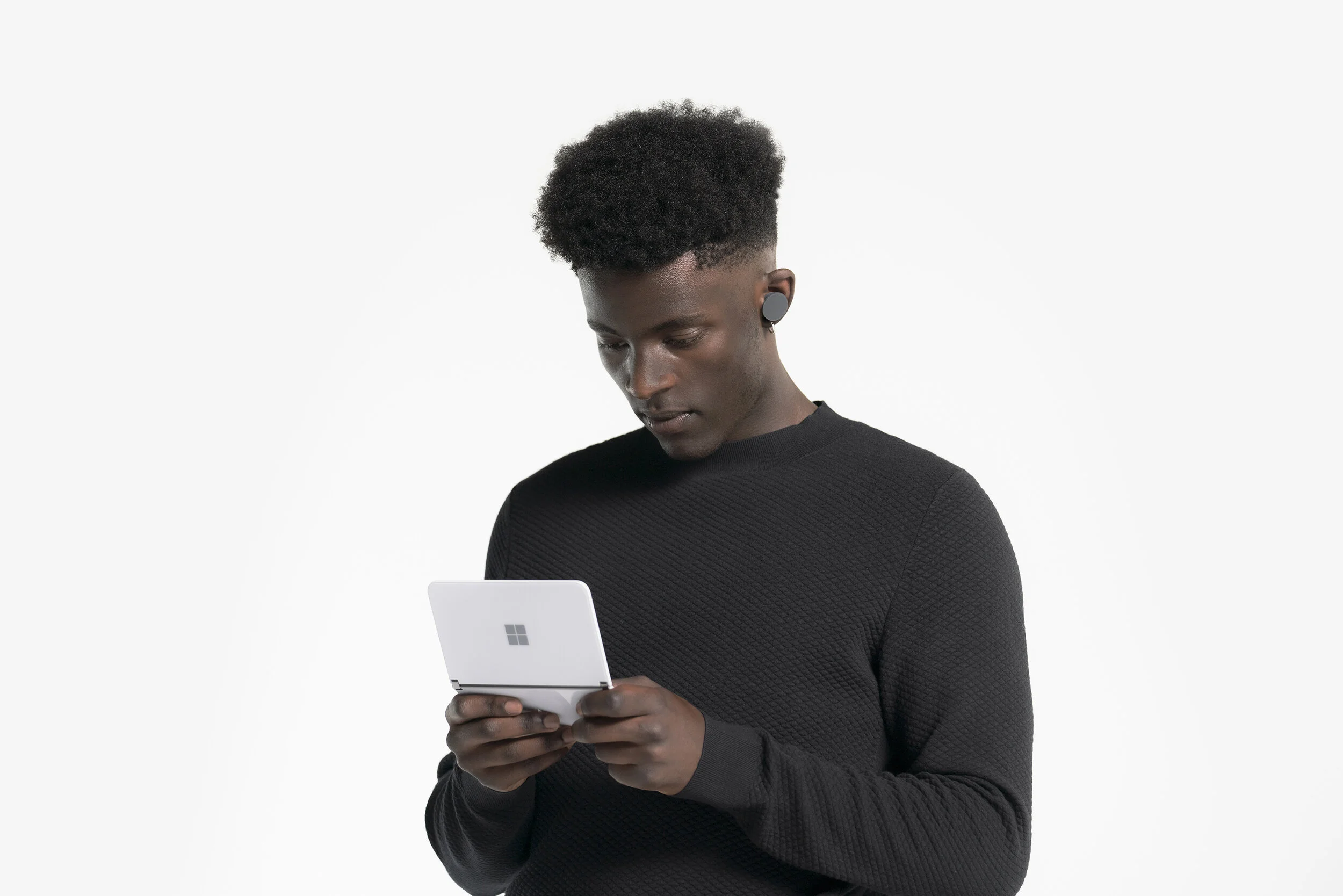
The Surface Duo assignment.
Surface Duo was an incredible marketing, design and engineering milestone for Microsoft. With its innovative dual-screen and interactive scrolling features, Surface Duo represented a rebirth for a company that had previously introduced failed Window phones.
Surface Duo was marketed as a mobile device, but the product was versatile. It could serve as a phone, a laptop or a pad.
Telling the story was important and providing the users a rich digital experience that could be as dynamic and interactive as the device was important for selling the device. Since customers would not be able to interact with the product in-person due to Covid-19 restrictions, web would have to do all the work.
On an expedited timeline, we needed to design and deliver an immersive, interactive and accessible web experience.
The scope included:
Program management
Data Analysis
Strategy and Planning
UX Design
Motion Design
Production
Development and Localization

Content.
Over the years, I evolved the relationship with the Microsoft client in order to get my team further into content creation. It was important for us to influence the direction of the imagery, animations and videos we would use.
This time we wanted to own it. I advocated for it. We needed to drive the ideation and creation of the content if we were expected to deliver a more dynamic experience.

Technology.
We knew there were challenges with technology going into the engagement. CMS limitations and the rigid design system meant we would need to develop a custom experience. We would need to ideate, design and execute prototypes quickly.
In order to drive towards our MVP, the development team would need to be involved at the beginning and the discovery process would have to be as transparent (and collaborative) as possible. I advocated for close collaboration between both teams.
Testing opportunities needed to be identified and assessed quickly, leveraging existing testing platforms.

Accessibility.
We would need to keep accessibility in mind. Defining the requirements for accessibility compliance would need to be a priority.
The process.
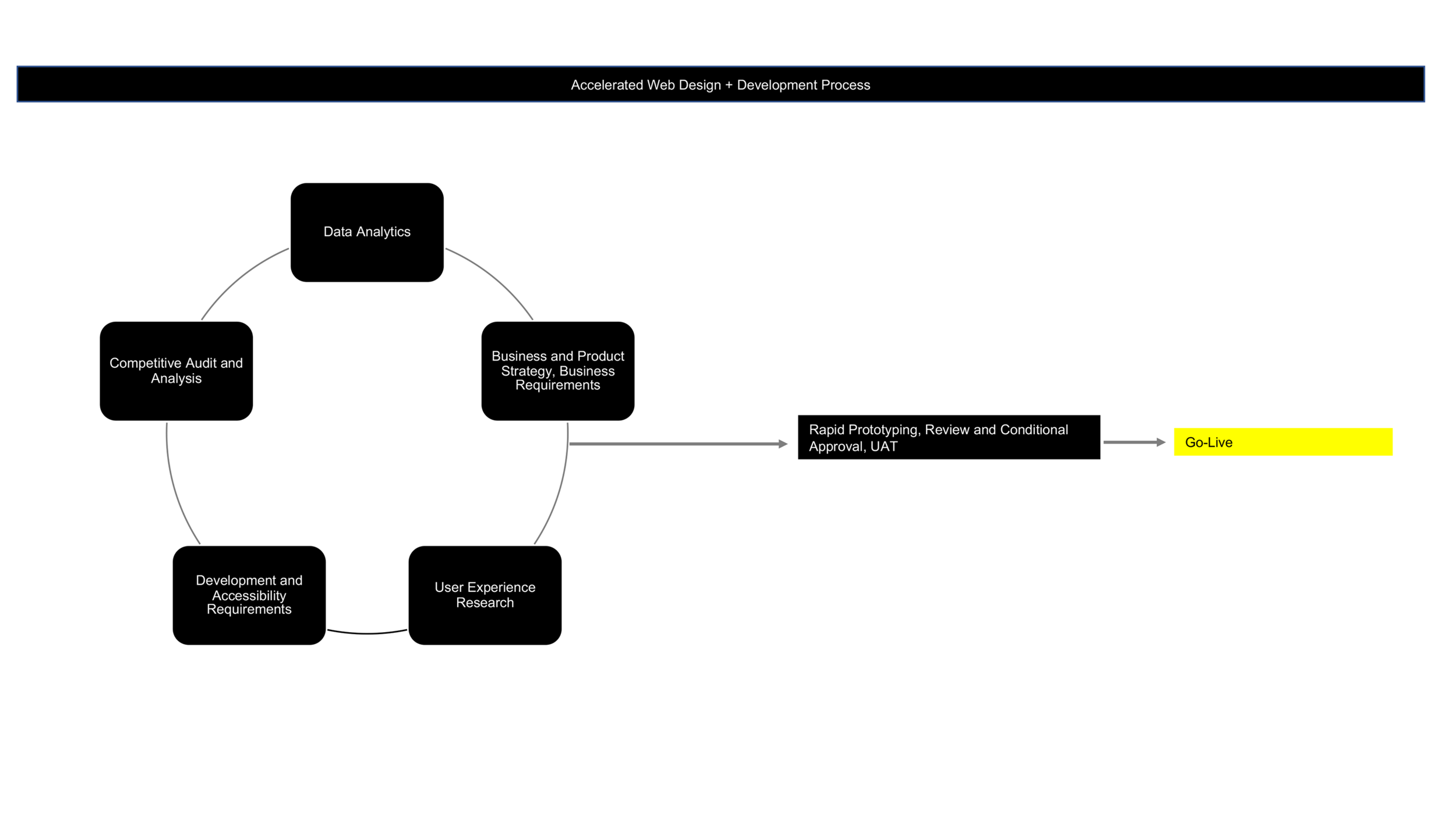
Traditionally, the research, design and production phases of the web experience would follow a more linear, waterfall process. As scrum master, I advocated for a more agile working process to accommodate pivots.
As the program lead, I worked to define the web process, introducing new process improvements as necessary to optimize the efficiency of our projects and overall web performance.
In launching the Surface Duo experience, we developed a more more collaborative working style, focused on improving efficiency.
I worked closely with stakeholders to define requirements, identify priorities and establish our roadmap
We quickly executed our ideas using rapid prototyping to drive development
We defined the product features most important to customers and analyzed competitive experiences, testing early prototypes to validate functionality
I developed an iterative collaboration working process to more quickly align on launch priorities
The recommendation.
Our proposal to the client ncluded several recommendations at various staffing and pricing levels. All proposals required full team alignment on the foundation of the project, and cross function collaboration across design and development partners:
We proposed a custom web experience leveraging new, more dynamic design modules
We recommended condensed product copy to shorten the length of the page. In previous analyses, we discovered that users typically consumed only 20-30% of the page before dropping off into the buy flow (or leaving the page), so keeping the page short was important.
To create efficiency and provide stability, we descoped selling modules, leveraging out-of-the-box white label experiences where possible
Getting customers to connect directly with their provider was important; we proposed designing a custom buy-flow that would simplify the buying process, allowing customers to purchase their selected device from Microsoft.com or their preferred 3rd party reseller, as allowed by their provider, directly from the site
We did away with static assets and pushed for more robust collaboration with Product Marketing and Brand Studio to define the shot list needed to tell a more cohesive, dynamic story, and advocated for more diverse models for greater representation
We collaborated with Brand studio to create richer media and more dynamic animation and video content to allow the product story to be told in a more immersive way
The result.
The launch of the Surface Duo mobile device was a huge moment for both the client and the agency. The experience launched with great engagement.
Customers responded warmly to the Surface Duo device, completely selling out inventory within just a few days of launch. Modules developed during this exercise were incorporated into the client’s broader design systems and this effort created the foundation for the creation of more dynamic media, as design solutions were championed and celerbated by senior leadership. This engagement opened the door to continue to introduce custom design solutions.
During its product expansion, we scaled this work to over 43 markets worldwide.

Getting gains.
We saw huge gains for our client with a 16% increase in web traffic, a 50% increase in web revenue, and 71.5% and 83.5% in overall page engagement across Consumer and Commercial users.

Customization with purpose.
By building this custom experience, we were able to create custom modules and make them reusable. We influenced the design system and broader design library, and scheduled future optimizations.

Proof of concept + business opportunities.
Due to the high visibility nature of this launch, we were able to push for more ownership over content creation, setting the team up for more design (and revenue) opportunities. The launch of this page experience served as proof of concept for more interactive web design.